

2025 Master Plan
What is the Master Plan?
Grand Haven Area Public Schools’ Master Plan is a long‑range roadmap designed to ensure our facilities and learning environments continue to meet the needs of students today and into the future. This work builds on feedback from staff, families, students, and community members, as well as enrollment trends, facility conditions, and educational priorities.
Master Plan vs. Strategic Plan
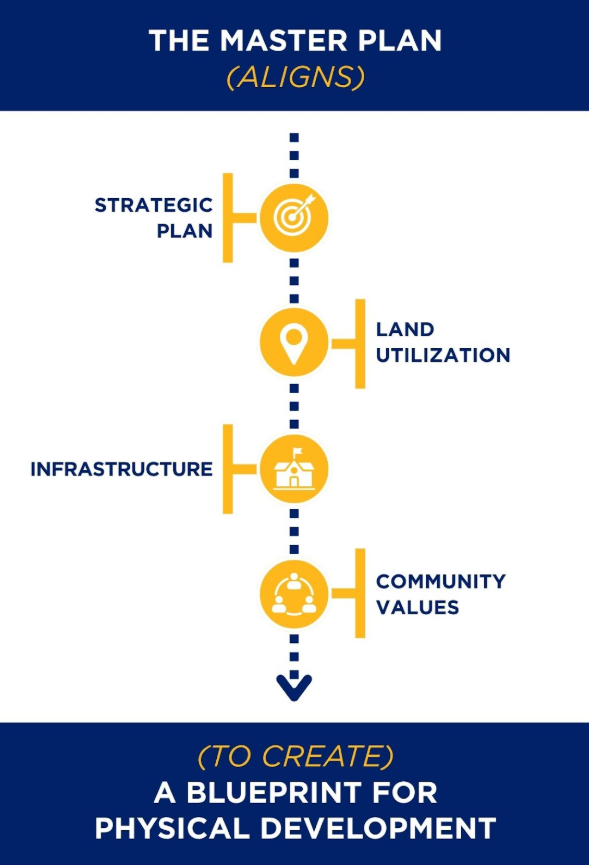 While our Strategic Plan lays out a clear vision for innovation, excellence, and engagement, the Master Plan asks what kind of learning environments we need to bring that vision to life. This is about preparing our district to meet the future—together.
Strategic Plan: Defines the district’s educational goals and priorities, focusing on student success through innovation and academic achievement.
Master Plan: Turns those goals into action, focusing on the physical environment, safety, capacity, and infrastructure needed to support modern learning.
Both are aligned and interconnected to ensure GHAPS is prepared to meet the evolving needs of students and the community.
Timing & Implementation
The timing of the strategies and projects outlined below will be shaped by future Board decisions and, where applicable, voter‑approved funding. No immediate changes are planned, and implementation will occur gradually over time. The pace and sequencing of work will depend on a variety of factors, including the scope and scale of any future bond measures, available resources, and evolving district needs.
As this work moves forward, Grand Haven Area Public Schools will continue to communicate clearly and regularly with families, staff, and the community before any changes are made.
Long-Term Facilities Plan
The framework outlined below reflects Grand Haven Area Public Schools’ adopted Master Plan, as approved by the Board of Education. The plan reflects multiple components that may advance independently over time, based on district priorities, available resources, and future community-approved funding. Together, these elements provide a clear framework for how Grand Haven Area Public Schools can thoughtfully align facilities, grade configurations, and learning environments as the district moves forward.
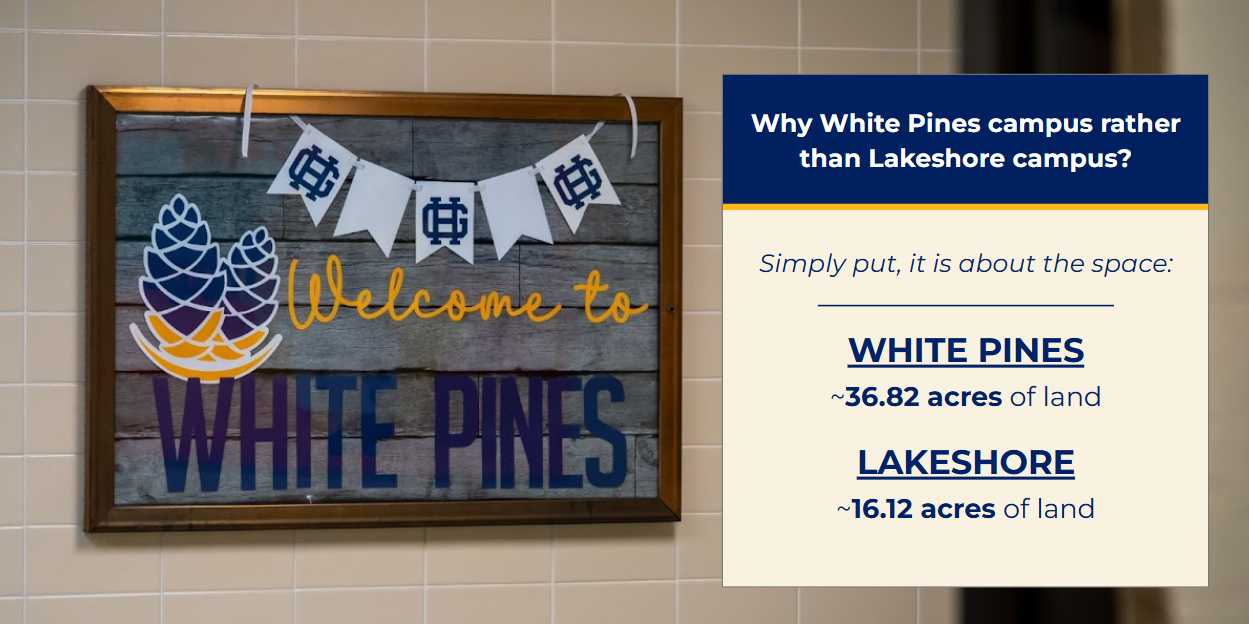
5–8 Campus on the White Pines Intermediate & Griffin Elementary Sites
Create a unified 5–8 campus by expanding White Pines Intermediate School and connecting the existing White Pines, Griffin Middle School, and Education Service Center (ESC) sites.
This plan will:
Bring grades 5–8 together on a single campus
Include separate grade‑level wings for grades 5–6 and 7–8 under one roof
Support smoother transitions between grade levels
Improve operational efficiency and shared use of spaces
Five Elementary Schools
Maintain and upgrade five elementary schools across the district to ensure safe, quality learning environments while aligning facilities with enrollment trends.
This approach will:
Include upgrades to Ferry, Lake Hills, Peach Plains, Robsinson, and Rosy Mound Elementaries*
Continue neighborhood‑based elementary schools
Include building upgrades and learning environment improvements
Adjust boundaries as needed to support balanced enrollment
Absorb Griffin Elementary students into the five‑elementary model
*Griffin Elementary to be absorbed into the expanded White Pines campus.
Grand Haven High School Upgrades
Utilize available space at Grand Haven High School to enhance learning opportunities and student experiences.
Priority areas include:
Expanded career‑readiness and applied learning spaces
Improvements to arts and athletics facilities
Better alignment of instructional spaces with modern programming needs
Lakeshore Site Utilization
Reimagine the Lakeshore Middle School site to better serve district and community needs.
This plan includes:
Renovation or rebuilding of the existing facility
Development of an innovation center and community partnership hub
Space for alternative education programming
Use for Education Service Center (ESC) functions
This site presents an opportunity to expand partnerships and flexible learning options while maximizing an existing district asset.
No existing schools will be left vacant or decommissioned under these concepts.
What Comes Next
The Master Plan is a long‑term, adopted roadmap for the district. While implementation will occur over time, the plan provides clear direction for future facility improvements, site utilization, and program alignment.
Any future actions related to construction, renovations, grade configuration changes, or funding would require additional Board of Education action and, where applicable, community approval.
Grand Haven Area Public Schools remains committed to transparency and ongoing communication as the district moves forward with implementation of the Master Plan.
Other Considerations
- Early Childhood Expansion (3 Total Locations):
- Duneside Discovery Center (ages 0-5 years)
- Lake Hills site (ages 0-5 years)
- Robinson site (ages 0-5 years)
- 152nd and Lincoln Site (Undeveloped): Hold as an asset for future use
- Central School Options: Expanded 0-3 programming
Learn More
Understanding School Finance
 |  |  |
STATE AID(School Aid Fund / SAF) | LOCAL FUNDING | FEDERAL FUNDS |
|
|
|
Question: What is the 18-mill GHAPS operating millage, and how does it impact the district's budget?
The 18-mill operating millage is a tax on non-homestead property—such as businesses, rental properties, and second homes—and is required by the State of Michigan for all public school districts.
It does not apply to primary residences. This local tax does not increase how much funding GHAPS receives per student — it simply allows us to collect the local portion of the state-set foundation allowance. If the millage isn’t approved, the district cannot collect its full allowance, and the state does not make up the difference.
Bonds vs. Sinking Funds
BONDS | SINKING FUNDS |
|---|---|
Address major upgrades and new facilities. | Address smaller projects and ongoing repairs between bond cycles. |
|
|
Used together, Bonds and Sinking Funds help school districts ensure:
- Predictable facility funding and upkeep that helps protect general fund dollars to support our students and classrooms
- Reduced emergency repairs
- Responsible long-term stewardship
Millage Rate Comparisons
The charts below compare GHAPS' total millage rates (including both sinking funds and bonds) with those of other area districts, as well as regional and state averages.
Key Insight:
Grand Haven Area Public Schools maintains the lowest total millage rate of all districts in Kent, Ottawa, and Muskegon Counties—less than one-tenth of the regional average.


